Restaurant Promotions: What to Run, When to Run It, and When Not to Discount
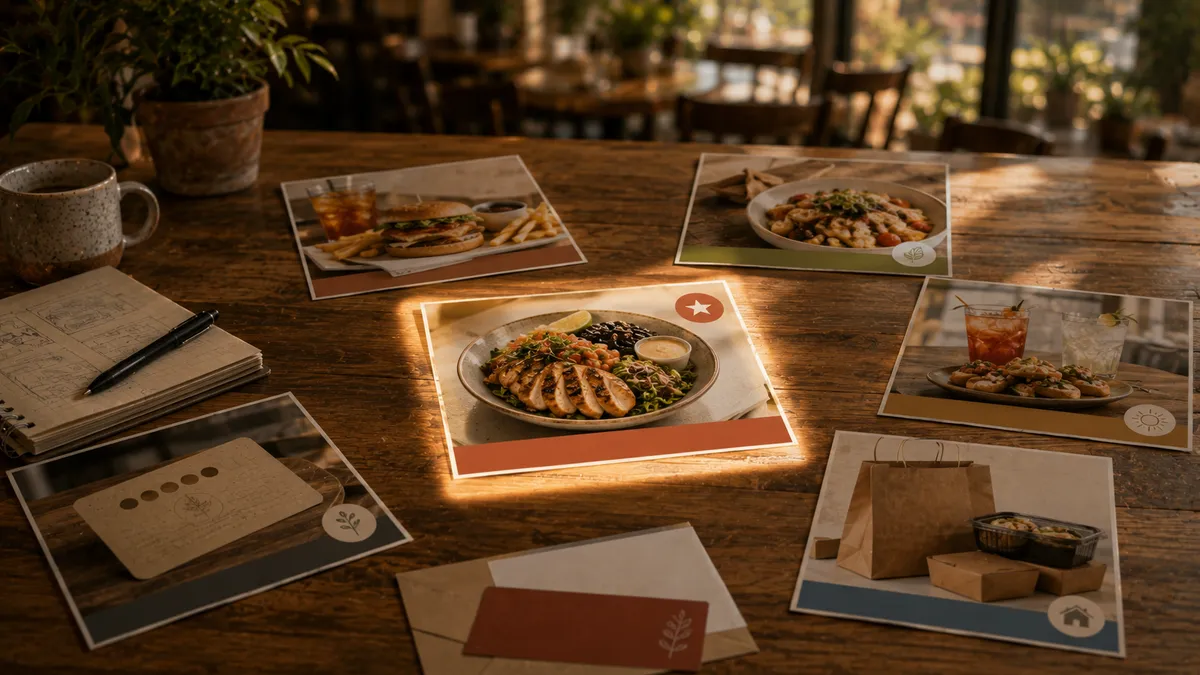
A restaurant promotion should solve a specific business problem.
If you cannot name that problem, you probably should not run the promotion.
Before deciding on 20% off, a BOGO deal, a happy hour, bonus loyalty points, or any other restaurant offer, answer four questions:
- What behavior are we trying to change?
- Which customers, day, or daypart are we targeting?
- What will the promotion cost us?
- How will we know if it worked?
If those answers are unclear, the next step is not to brainstorm more restaurant promotion ideas. It is to understand the business problem first.
That distinction matters because restaurants operate on thin margins. The National Restaurant Association estimates that a typical restaurant has a pre-tax profit margin of roughly 5%. A promotion that generates more orders while giving away too much contribution can easily look successful at the register and still leave the business worse off.
The best restaurant promotions are specific, timely, economically sensible, measurable, and tied to an objective.
And sometimes the right promotion is no promotion at all.
A promotion is not the same thing as a discount
Restaurant promotions and restaurant discounts are often treated as synonyms. They are not.
A promotion is anything designed to encourage a particular customer behavior or bring attention to a particular offer.
A discount is one possible promotional mechanic.
You can promote a restaurant without cutting the price of the entire check.
For example:
- a limited-time menu item
- a lunch bundle
- a family meal
- a prix fixe menu
- a tasting
- a loyalty bonus
- early access for regular customers
- a free add-on
- a referral reward
- a collaboration with another local business
- an event-specific menu
- a catering package
- a seasonal special
Even platforms that are often associated with discounting provide more targeted options. DoorDash, for example, currently supports menu-wide, item-specific, and time-based promotions, including lunch specials, happy-hour campaigns, BOGO offers, and promotions for new or lapsed customers.
The important principle is simple:
Discounting is one promotional tool, not the definition of a promotion.
Start with the business objective
The promotion mechanic should come after the objective.
If the problem is weak Tuesday lunch traffic, that points toward a different offer than a restaurant trying to raise average check, introduce a new entrée, win back former customers, or capture demand from a nearby festival.
| Business objective | Promotion types that may fit |
|---|---|
| Increase weak-period traffic | Daypart offer, happy hour, lunch bundle, loyalty multiplier |
| Increase average check | Bundle, add-on incentive, premium upgrade, family package |
| Drive repeat visits | Loyalty reward, bounce-back offer, win-back campaign |
| Generate trial | Sampling, first-visit offer, local partnership, referral |
| Launch a new menu item | Limited-time feature, sampling, bundle with proven item |
| Drive catering | Office package, catering bundle, referral offer |
| Increase direct ordering | Pickup or direct-order incentive |
| Capture local-event demand | Event menu, takeaway package, extended-hours offer |
| Shift demand to another time | Early dinner, late-night special, weekday offer |
| Reward loyal customers | Bonus points, early access, targeted perk |
| Build awareness | Collaboration, community event, seasonal feature |
This objective-first approach also makes the results easier to judge.
If the goal was to improve Tuesday lunch, measure Tuesday lunch.
If the goal was to grow catering, measure catering inquiries and orders.
If the goal was to encourage repeat visits, total revenue during the promotion is not enough. You need some measure of whether those customers came back.
Promotions for slow days and weak dayparts
One of the strongest uses for a restaurant promotion is to create or shift demand into a period where you have unused capacity.
That might mean:
- a weekday lunch bundle
- an early dinner special
- a happy hour
- a late-night offer
- a family night
- double loyalty points during a specific period
- a pickup offer during an unusually weak daypart
The key is to target the actual weakness.
If Tuesday lunch is the problem, target Tuesday lunch.
Do not automatically discount the entire restaurant for an entire week.
A broad discount can give away margin during periods that were already performing well.
Before launching anything, look at several weeks of comparable sales rather than reacting to one bad day. A rainy Tuesday, road closure, sporting event, or unusual staffing problem can make a single period look worse than it really is.
This is where your restaurant performance metrics and your analysis of increasing restaurant sales on slow days should work together. First establish that the weakness is persistent. Then decide whether a promotion is the appropriate response.
Promotions to increase average check
If traffic is healthy but guests are spending less than you would like, a blanket discount makes little sense. The objective is not more customers. It is a better product mix or greater attachment.
Possible mechanics include:
- entrée + side + drink bundles
- appetizer + entrée packages
- dessert add-ons
- beverage pairings
- premium upgrades
- family meals
- group packages
The important metric is not merely ticket size. It is contribution.
Suppose a restaurant sells an add-on for $5 and the incremental food and packaging cost is $1.50.
That add-on contributes:
- Selling price: $5.00
- Incremental cost: $1.50
- Contribution: $3.50
Now compare that with taking 15% off a $30 check.
The discount costs:
- $30 × 15% = $4.50
The add-on can create additional value while preserving the base menu price. The percentage discount simply removes $4.50 from revenue unless it causes enough incremental behavior to compensate.
This is why understanding food cost percentage, contribution, and restaurant menu pricing is more useful than asking which restaurant discount ideas are most popular.
Promotions that encourage repeat visits
Repeat-visit promotions should encourage another visit, not merely reward a purchase that would have happened anyway.
Common approaches include:
- loyalty rewards
- visit-based rewards
- bounce-back offers
- birthday or occasion offers
- bonus-point periods
- win-back campaigns
- direct-order incentives
- targeted rewards for known customers
Loyalty can be valuable, but simplicity matters.
The National Restaurant Association notes that loyalty programs are commonly used to incentivize repeat business and can also help restaurants understand guest preferences.
For an independent operator, however, an elaborate points structure is not automatically better.
A simple program that staff can explain in one sentence and customers can understand immediately is usually more useful than six reward tiers, complicated expiration rules, and a collection of offers nobody can remember.
There is also an important difference between:
- rewarding an existing habit, and
- encouraging a new visit
Giving a regular customer a reward can strengthen loyalty. But if you are evaluating the financial effectiveness of a promotion, do not automatically count every redemption as an incremental sale.
That customer may have visited anyway.
Promotions for new customers
New-customer restaurant marketing promotions can reduce the risk of trying an unfamiliar restaurant.
Options include:
- a first-order offer
- sampling
- a local-resident offer
- a nearby-office partnership
- a referral program
- collaboration with another local business
- participation in a community event
- an opening offer
- a neighborhood welcome promotion
The objective is usually trial.
That does not necessarily require a deep discount.
For example, a café trying to reach nearby office workers might create a weekday lunch package with an easy-to-understand price rather than advertise 25% off everything.
A deep first-visit discount can generate transactions, but some of those customers may primarily be shopping for deals. If they have little intention of returning at normal price, the promotion can produce impressive redemption numbers without creating valuable customers.
The question is not simply:
How many new customers used the offer?
It is also:
What happened after the offer?
Promotions for new menu items
When launching a new menu item, the problem is usually not price.
It is one or more of:
- low awareness
- uncertainty
- lack of trial
- lack of urgency
That suggests promotion mechanics such as:
- a limited-time feature
- launch-weekend placement
- staff recommendations
- sampling
- a bundle with a proven best seller
- loyalty-member early access
- social posts
- prominent menu placement
Discounting the new item immediately can sometimes weaken its positioning. If the restaurant is introducing a premium seasonal entrée, launching it at a large markdown may accidentally tell guests that the regular price is not the real price.
Instead, use the promotion to answer:
Why should someone notice this item now?
Limited-time offers
Limited-time offers, or LTOs, can make sense when there is a real reason the item or package is temporary.
Examples include:
- seasonal ingredients
- holidays
- local events
- collaborations
- testing a new concept
- temporary product availability
- sporting events
- limited production capacity
A good LTO can create:
- novelty
- urgency
- a reason to talk about the restaurant
- a way to test demand before permanently changing the menu
- fresh marketing material
But an LTO also has operational costs.
A new item can introduce:
- additional ingredients
- prep steps
- staff training
- purchasing complexity
- waste
- slower ticket times
- menu confusion
A promotion that creates kitchen chaos may not be worth running even if customers like the idea.
Promotion economics should include operational complexity, not just the customer-facing discount.
Happy hour is really daypart demand management
A useful way to think about happy hour is not simply “discounted drinks.”
The actual business objective is generally:
Create or shift demand into an otherwise weaker period.
That might involve:
- selected food
- selected drinks
- bundles
- early-evening pricing
- weekday-only offers
- specific menu items
- loyalty bonuses
DoorDash’s current merchant tools even include time-based happy-hour and lunch-special promotions, which illustrates the broader value of restricting an offer to the period where you want to change behavior.
If 4:00–6:00 p.m. is weak but 7:00 p.m. is already busy, a promotion that continues through the dinner rush may just discount demand you already had.
Alcohol pricing and promotion rules vary by state and locality, so restaurants should check the rules that apply to their jurisdiction before designing alcohol-specific offers.
The broader strategy applies regardless: identify the weak daypart first.
Why bundles can be better than simple discounts
Bundles deserve serious consideration before percentage-off deals.
Examples include:
- lunch combo
- family dinner
- entrée + side + drink
- game-day package
- dinner for two
- catering package
- appetizer + entrée
- takeout bundle
Bundles can work because they can provide:
- a simpler purchase decision
- a clear value proposition
- predictable ticket size
- controlled product mix
- stronger attachment of profitable items
- easier ordering
Suppose a burger, fries, and drink individually total $18.
You create a $16.50 combo.
The customer sees $1.50 of value, but your actual cost depends on the contribution of each item in the package. If the drink and fries have favorable incremental economics, the bundle may preserve much more contribution than offering 15% off the customer’s entire order.
That does not mean bundles are automatically profitable.
You still need to calculate:
- food cost
- packaging
- delivery-related costs if applicable
- labor requirements
- expected substitution
If existing customers simply switch from buying the same three items separately at $18 to buying the new $16.50 bundle, you have created a discount, not incremental demand.
When BOGO promotions make sense
BOGO restaurant deals can be useful, but they are not universally good.
They may make more sense when:
- the promoted item has relatively low incremental cost
- you are encouraging product trial
- the offer naturally brings two people or a group
- you have unused production capacity
- the campaign is limited to a weak period
- you have a legitimate inventory reason
They may make less sense when:
- the free item is an expensive entrée
- the restaurant is already busy
- the customers would likely have bought both items anyway
- the offer creates heavy kitchen demand at the wrong time
- margins are already under pressure
The National Restaurant Association has found that consumers are interested in BOGO and combo-style value offers, particularly for off-premises occasions. That tells you customers may respond to these mechanics. It does not tell you that the economics will work for your restaurant.
Customer appeal and restaurant profitability are separate questions.
Percentage-off vs. dollar-off
A percentage discount and a dollar discount can produce very different economics.
Compare:
20% off
with:
$10 off $50
With the second offer, the minimum spend limits your exposure.
At exactly $50:
- 20% off = $10
- $10 off $50 = $10
But at $80:
- 20% off = $16
- $10 off $50 = $10
The percentage discount grows with the ticket. The fixed-dollar discount does not.
That does not make one universally better.
Consider:
- your normal average check
- the minimum purchase requirement
- margin exposure
- how easy the offer is to understand
- the behavior you want to encourage
If your objective is to push a $42 average ticket above $50, “$10 off $50” has a clear threshold.
If your objective is to introduce a particular product, neither format may be the best tool.
Free-item promotions
Sometimes a free item with low incremental cost and high perceived value is preferable to discounting an entire order.
Examples include:
- free appetizer
- free dessert
- free nonalcoholic drink
- free add-on
- free delivery
- free side
Suppose a dessert sells for $8 and has $2.25 of incremental food and packaging cost.
Offering that dessert may cost the restaurant approximately $2.25 in incremental product cost.
Compare that with taking 15% off a $50 check:
- $50 × 15% = $7.50
The free dessert may create a compelling customer-facing offer while exposing the restaurant to less direct margin loss.
There can still be labor, waste, and substitution effects, so the real cost should be measured rather than assumed.
Loyalty promotions
Restaurant loyalty promotions can include:
- bonus points
- double-point periods
- targeted rewards
- visit milestones
- referral rewards
- early access
- occasional free items
- win-back offers
They are particularly useful when the objective is retention rather than immediate acquisition.
The important thing is to keep the system manageable.
A neighborhood restaurant does not need to imitate an airline rewards program.
If customers do not understand how rewards work, or staff cannot consistently explain and apply them, complexity becomes its own cost.
A good loyalty mechanic should answer:
What behavior are we rewarding?
and:
Is that behavior valuable enough to reward?
Event-based promotions
Local events can create demand that would not otherwise exist.
Examples include:
- festivals
- football games
- concerts
- conferences
- school events
- parades
- holidays
- community markets
- nearby performances
Possible restaurant offers include:
- pre-event prix fixe menu
- takeaway package
- family bundle
- game-day package
- catering
- extended hours
- post-event late-night menu
- event-themed special
The important operational lesson is that promotions must be prepared before the demand arrives.
A Saturday festival may require decisions several days earlier about:
- inventory
- staffing
- scheduling
- prep
- packaging
- creative
- online ordering
- marketing
- extended hours
The restaurant that notices the event Saturday afternoon may already be too late to make the most of it.
This is why local events and restaurant demand should be considered together rather than treating event marketing as a last-minute social-media task.
A competitor promotion is information, not an instruction
Suppose a nearby restaurant launches:
20% off Tuesdays.
Should you match it?
Not automatically.
Ask:
- Is your Tuesday actually weak?
- Is there evidence your customers are switching?
- Does the competitor serve the same customer segment?
- Is the offer targeting the same daypart?
- Is your margin structure comparable?
- Could you respond with differentiated value instead?
- Has your own performance changed since the competitor launched it?
Possible responses include:
- do nothing
- monitor the situation
- communicate your existing value more clearly
- create a different offer
- improve a product or experience
- respond directly if your own data supports it
Restaurant competitor analysis should help you understand the market, not turn every competitor action into a command.
A competitor promotion is information, not an instruction.
When not to run a restaurant promotion
Knowing when to avoid a promotion is at least as important as having a list of restaurant specials ideas.
Demand is already strong
If Friday dinner is routinely full, a Friday dinner discount may simply reduce the amount paid by customers who were already coming.
You have not created useful demand.
You have discounted existing demand.
You do not know what problem you are solving
“No objective” means there is no useful way to evaluate the result.
A promotion should not exist because:
We haven’t marketed anything lately.
Start with the business problem.
The problem is operational
If guests are complaining about slow service, incorrect orders, inconsistent food, or long ticket times, increasing traffic can make the situation worse.
Marketing does not fix an operational bottleneck.
Margin is already under pressure
Restaurants have little room for careless discounting. The National Restaurant Association continues to describe [roughly 5% pre-tax profit margins for a typical restaurant](https://restaurant.org/research-and-media/research/restaurant-economic-insights/analysis-commentary/elevated-costs-continue-to-pressure-restaurant-profitability/).
If food or labor costs are rising quickly, diagnose the underlying economics before automatically cutting prices.
The slowdown may be temporary noise
One poor Tuesday is not necessarily a trend.
Look at comparable periods over several weeks.
The offer conflicts with your positioning
Constant deep discounting can alter what customers believe the restaurant is worth.
A premium restaurant that trains customers to expect 30% off may eventually have difficulty making the regular price feel credible.
You cannot handle the response
If the kitchen, dining room, delivery operation, or staff is already near capacity, creating additional demand may damage the guest experience.
A promotion that produces orders the restaurant cannot execute is not a successful promotion.
The hidden cost of a promotion
The headline discount is only one part of the cost.
A promotion may also involve:
- lower gross margin
- ad spend
- delivery-platform fees
- additional labor
- packaging
- loyalty rewards
- food waste
- creative production
- operational complexity
- cannibalization
- additional customer-service burden
Third-party delivery platforms can add their own economics. DoorDash provides merchant reporting fields that separate customer discounts, marketing fees, and marketing credits, while Uber Eats notes that eligible merchants can manage promotions through Uber Eats Manager and review past, active, and planned campaigns.
That matters because:
A promotion generated $2,000 in sales.
does not mean:
The promotion generated $2,000 in value.
What matters is the incremental contribution generated after the incremental costs of the promotion.
Cannibalization, in plain English
Cannibalization happens when a promotion appears to generate sales but actually discounts business that would have happened anyway.
Imagine a Friday-night promotion gets 100 redemptions.
That sounds impressive.
But suppose Friday nights are normally full.
Many of those 100 customers may have visited even without the promotion.
The campaign can show:
- lots of redemptions
- high promotional revenue
- strong customer engagement
while still being economically poor.
Now consider a Tuesday offer that brings 20 additional parties into an otherwise underused dining room.
That demand may actually be incremental.
This is why redemption count alone is not enough.
The important question is:
What happened because of the promotion that probably would not have happened without it?
Choose the success metric before launch
Do not wait until the campaign is over and then search for a number that looks good.
Set the success metric first.
Possible metrics include:
- incremental transactions
- incremental covers
- contribution
- average check
- daypart sales
- repeat visits
- redemption rate
- direct-order share
- new-customer trial
- catering inquiries
- sales of the promoted product
Match the metric to the objective.
| Objective | Better metric |
|---|---|
| Improve Tuesday lunch | Tuesday lunch transactions or contribution |
| Increase average check | Average check and contribution |
| Launch an item | Unit sales, trial, repeat purchase |
| Drive repeat visits | Subsequent visit rate |
| Grow catering | Qualified inquiries and catering sales |
| Shift to direct ordering | Direct-order share |
| Acquire customers | New-customer trial and later repeat visits |
| Fill a weak daypart | Incremental covers during that period |
Total revenue is useful, but it is not the answer to every promotional question.
A simple restaurant promotion economics example
Suppose a restaurant normally does the following on Tuesday dinner:
- 60 orders
- $25 average check
- $1,500 in sales
It runs a targeted promotion.
During the promotion:
- 80 orders
- $23 average check
- $1,840 in sales
At first glance:
- Sales increased by $340
- Orders increased by 20
That looks positive.
But now assume, purely for illustration:
- variable food and packaging cost = 32% of sales
- additional labor required for the promotion = $90
- promotion-related marketing cost = $40
Normal Tuesday
Sales:
$1,500
Variable food and packaging cost:
$1,500 × 32% = $480
Contribution before the additional promotional costs:
$1,500 - $480 = $1,020
Promotional Tuesday
Sales:
$1,840
Variable food and packaging cost:
$1,840 × 32% = $588.80
Contribution before added labor and marketing:
$1,840 - $588.80 = $1,251.20
Subtract:
- additional labor: $90
- marketing: $40
Adjusted contribution:
$1,251.20 - $90 - $40 = $1,121.20
Compared with the normal Tuesday:
$1,121.20 - $1,020 = $101.20 of additional contribution
Under these assumptions, the promotion created additional contribution.
But notice how different that conclusion is from simply saying:
Revenue increased by $340.
And the result could easily change if the promotion required a larger discount, higher labor expense, delivery fees, or more packaging.
This is why restaurant discount strategy should be evaluated in contribution, not revenue alone.
A practical restaurant promotion decision table
| Situation | Promotion? | Better approach |
|---|---|---|
| Tuesday lunch has been below its normal baseline for six weeks | Maybe | Test a targeted lunch bundle |
| Friday dinner is routinely full | Usually no | Protect margin and service quality |
| New menu item has low awareness | Yes, potentially | LTO, sampling, feature, or bundle |
| Competitor launches 20% off but your sales are unchanged | Probably no | Monitor before reacting |
| Large local event is happening this weekend | Maybe | Create an event-specific package if operations allow |
| Reviews repeatedly mention slow service | No | Fix operations first |
| Food cost has risen sharply | Not as a first move | Review food cost and menu pricing |
| Average check is weak but traffic is healthy | Maybe | Test bundles or profitable add-ons |
| Loyal customers are visiting less frequently | Maybe | Targeted win-back or loyalty offer |
| One unusually bad day occurred | Probably not yet | Determine whether there is a real pattern |
The table is deliberately full of “maybe.”
Promotions are context-dependent decisions.
Use a promotion ladder before reaching for a deep discount
Before using a large restaurant discount, move through progressively more expensive interventions.
1. Communicate existing value
Maybe customers simply do not know about something you already offer.
Highlight:
- lunch service
- catering
- takeout
- family meals
- seasonal items
- existing specials
Google Business Profile, for example, allows businesses to publish updates, offers, and event information directly on Search and Maps.
Sometimes better visibility is enough.
2. Feature a product
Give an item more prominent placement or staff attention.
No discount is required.
3. Create a bundle
Combine products into a useful package with controlled economics.
4. Add a low-cost perk
Offer something with favorable incremental cost but meaningful perceived value.
5. Use a loyalty reward
Target customers whose repeat behavior you are specifically trying to influence.
6. Use a targeted discount
Restrict the discount by:
- customer
- order size
- item
- daypart
- channel
- date
7. Use a broad discount
Only after determining that a broad price incentive is actually justified.
The point of the ladder is not that discounts are bad.
It is that you do not need to jump directly to the most expensive promotional tool.
How Allwhile fits into restaurant promotion decisions
The difficult part of restaurant promotions is rarely generating another promotion idea.
The difficult part is knowing whether an action is warranted.
Before acting, an owner may need to know:
- Is demand actually weak?
- Which day or daypart is weak?
- Is the problem traffic or spend?
- Is there an upcoming local event?
- Did a nearby competitor change something?
- How did previous promotions perform?
- Are costs or margins changing?
- Is the restaurant already near capacity?
- Is this situation unusual enough to act on?
Allwhile is an agentic business-intelligence product for independent businesses, initially focused on restaurants.
It is built around three questions:
- How is my business doing?
- What’s happening around me?
- What can I do about it?
The promotion decision sits between all three.
For example, useful reasoning might look like:
Tuesday lunch has been below its normal baseline for five weeks. A targeted lunch offer may be worth testing.
Or:
Saturday dinner is already running above normal. No discount is needed.
Or:
A local festival is expected to increase afternoon traffic this weekend. A takeaway bundle may fit the occasion.
Or:
A previous discount increased transactions but reduced contribution. Consider testing a bundle instead.
Those are examples of the kind of reasoning an intelligence layer can support, not a claim that every situation requires intervention.
In fact, sometimes the most useful recommendation is:
Nothing unusual requires intervention.
An intelligent action system should not feel obligated to invent work every day.
Good software should be willing to tell you that no promotion is necessary.
A 5-minute restaurant promotion checklist
Before launching a restaurant promotion, ask:
- What problem are we solving?
- Which customer, day, or daypart are we targeting?
- Why should this particular offer change behavior?
- What will it cost, including margin, labor, marketing, and operational costs?
- Can the restaurant comfortably handle the response?
- Which metric should improve?
- What would count as success?
- When will we stop, review, or change the promotion?
If you cannot answer those eight questions, the campaign probably needs more thought.
Run restaurant promotions for a reason
There are plenty of restaurant promotion ideas available.
The challenge is not finding one.
The challenge is choosing the right intervention for the actual business situation.
The strongest restaurant promotions are:
- specific
- targeted
- timely
- operationally manageable
- economically sensible
- measurable
- tied to a real business objective
A Tuesday lunch problem calls for a Tuesday lunch solution.
A retention problem calls for a retention strategy.
A new-menu awareness problem calls for awareness and trial.
And a Friday night that is already full may call for no restaurant deal whatsoever.
Run a promotion because you have a reason, not because you feel like the restaurant should be marketing something.
The question is not:
What promotion should we run?
It is:
What, if anything, are we trying to change?
That is where better restaurant marketing starts, and it is the kind of decision Allwhile is designed to help make easier.