How Local Events Affect Restaurant Sales — and How to Prepare for Them
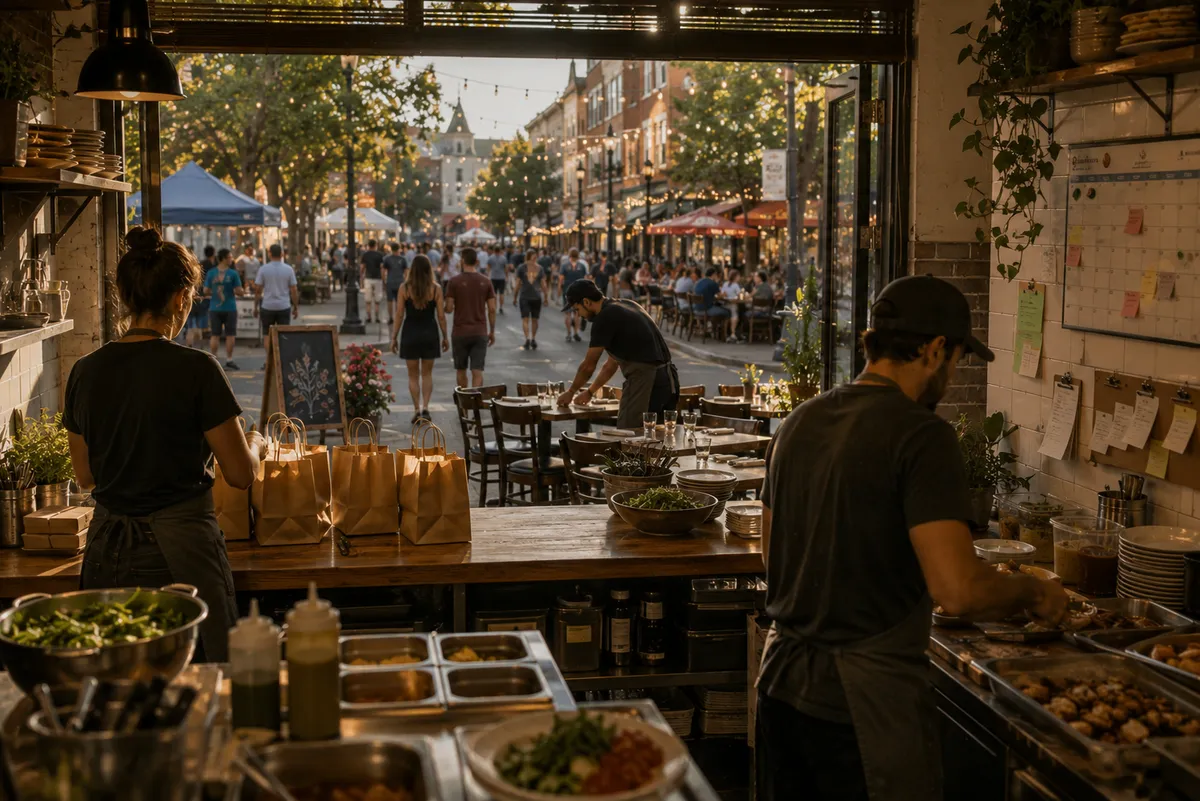
A festival, concert, football game, convention, parade, or school event can change restaurant demand dramatically.
It can also do almost nothing.
Or it can make business worse.
A large event may bring thousands of people into the neighborhood while closing the road your regular customers use. A concert may create a strong dinner rush before the doors open but little business during the show itself. A festival with dozens of food vendors may attract enormous crowds without sending many of them into nearby restaurants.
The useful question is not:
Is there an event nearby?
It is:
Is this event likely to change demand for this restaurant, at a time and in a way we can actually serve?
A useful local event should pass several filters (and if it’s a slow day otherwise, check out how to increase sales on slow days):
- Relevant audience
- Meaningful proximity
- Compatible timing
- Enough potential demand
- Operational fit
If those factors line up, preparation can affect staffing, inventory, hours, menu design, pickup, reservations, and marketing.
If they do not, the right response may simply be to watch the event and do nothing.
Why local events can change restaurant demand
Events change more than the number of people in an area.
They change where people are, when they move, how they travel, when they eat, and what kind of meal is convenient.
That can produce several different effects.
More people enter the area
The obvious effect is an increase in potential customers.
A festival, tournament, convention, or concert can bring visitors who would not normally be in the neighborhood.
Travel and visitor spending can be economically significant at the community level. The U.S. Travel Association reports $1.4 trillion in U.S. travel spending in 2025, illustrating how movement of visitors supports local economic activity.
But a larger crowd does not automatically mean restaurant sales will rise.
Those visitors still need to:
- pass near the restaurant
- want the type of food you serve
- be hungry during the relevant window
- be able to reach you
- choose you instead of food offered at the event
Attendance is only the beginning of the analysis.
People change when they eat
Events can shift normal meal patterns.
A 7 p.m. concert might create:
- early dinner demand from 4:30–6:30 p.m.
- a quieter period during the show
- late-night demand after 9:30 p.m.
A Saturday festival running from 10 a.m.–5 p.m. may affect:
- breakfast
- lunch
- afternoon snacks
- takeout
- early dinner
A Sunday morning road race may produce:
- early coffee demand
- grab-and-go breakfast
- post-race brunch
This is why event planning should focus on demand windows, not simply the event’s official start time.
Regular customers may change their behavior
Events also affect people who were already likely to visit.
Regular customers may:
- arrive earlier
- avoid the neighborhood
- order pickup
- switch to delivery
- postpone a visit
- choose a different restaurant because parking is difficult
So an event can increase visitor traffic while reducing normal traffic.
The net effect is what matters.
Workers and participants create additional demand
The audience is not the only group worth considering.
Events may also bring:
- vendors
- event staff
- performers
- athletes
- coaches
- organizers
- media
- security staff
- production crews
A convention may produce weekday dining demand from attendees and exhibitors. A tournament may create group orders from teams. A multi-day festival may create repeat demand from vendors and staff.
These groups may behave differently from spectators, so understanding the event composition can matter as much as headline attendance.
Pickup and delivery patterns can change
Off-premises demand is now a major part of restaurant behavior. The National Restaurant Association reported in its 2025 Off-Premises Restaurant Trends research that nearly three-quarters of restaurant traffic occurs off-premises.
An event can make pickup and delivery more attractive because diners want convenience.
But the same event can make fulfillment harder because of:
- traffic
- blocked streets
- unavailable parking
- crowded pickup areas
- delayed couriers
An event can therefore increase online demand and reduce the restaurant’s ability to fulfill it at the same time.
Not all local events matter equally
A practical way to think about events is to classify them by likely relevance rather than treating everything on the community calendar equally.
High-potential events
These often have several favorable signals:
- meaningful attendance
- close proximity
- audience matches the restaurant
- timing overlaps a meal or snack period
- attendees need food before, during, or after
- access to the restaurant remains practical
Examples might include a concert venue within walking distance of a quick-service restaurant or a youth sports tournament near a family dining concept.
Medium-potential events
These deserve monitoring but may not justify major preparation yet.
Examples:
- moderate attendance
- some customer overlap
- uncertain pedestrian flow
- event is nearby but not directly on a normal route
- timing only partially overlaps a useful daypart
Low-potential events
These may have little effect even if they sound important.
Common reasons include:
- event is too far away
- audience does not fit the restaurant
- timing does not overlap useful demand
- venue is self-contained
- substantial food is already available inside
- event traffic makes the restaurant harder to reach
There is no universal mileage threshold that separates relevant events from irrelevant ones.
A restaurant half a mile away along the natural pedestrian route may benefit more than one only a few hundred feet from the venue but separated by a highway, parking structure, gate, or inaccessible street layout.
Audience fit matters more than headline attendance
A large crowd is only useful if some of that crowd has a reason to become your customer.
Ask:
- Who attends this event?
- Are they families, students, tourists, office workers, sports fans, convention attendees, or local residents?
- Are they likely to want a full meal or something fast?
- Are they likely to dine before, during, or after?
- Does the restaurant’s price point fit the occasion?
- Does the concept match the group’s needs?
Consider a few examples.
Family festival
Could be particularly relevant to:
- pizza
- casual restaurants
- ice cream
- family dining
- quick-service concepts
Families may value easy seating, familiar items, speed, and group-friendly meals.
Late-night concert
Could be more relevant to:
- bars
- quick-service restaurants
- late-night concepts
- takeout
- restaurants already open after the show
A breakfast café that closes at 3 p.m. may see little benefit from the same event.
Morning race
Could favor:
- coffee shops
- bakeries
- breakfast restaurants
- smoothie concepts
- grab-and-go
Business convention
May create demand for:
- weekday lunch
- group dinners
- expense-account meals
- private dining
- catering
- convenient takeout near hotels or the convention venue
Event size matters much less when the audience does not fit the restaurant.
Think in demand windows, not event times
One of the easiest mistakes in restaurant event planning is focusing on when the event happens instead of when people eat around it.
Suppose a concert begins at 7 p.m.
The highest restaurant opportunity might be:
- 4:30–6:30 p.m.: pre-show dining
- 6:30–7:00 p.m.: rapid decline as attendees enter
- 7:00–9:30 p.m.: potentially normal or weak traffic
- 9:30–11:30 p.m.: post-show demand
The restaurant does not have one “concert period.”
It has several possible demand windows.
That distinction should affect:
- staffing
- reservations
- menu availability
- kitchen prep
- closing time
- promotions
- pickup capacity
Similarly, a football game at noon may influence breakfast and pre-game takeout more than dinner.
When evaluating an event, ask:
When would this audience realistically want food from us?
That is a better planning question than simply checking the event start time.
Distance is really about movement
Raw distance is useful, but movement patterns are usually more important.
Consider:
- venue entrances
- parking lots
- transit stations
- walking routes
- road closures
- bridges and barriers
- highway access
- pedestrian crossings
- rideshare pickup zones
- neighborhood layout
The Federal Highway Administration notes that planned special events can affect traffic demand, street operations, transit, parking, and pedestrian flow. Its event-planning guidance specifically considers how attendees move between parking areas, drop-off points, venue entrances, roads, and pedestrian routes.
For a restaurant owner, the lesson is practical:
“Near the venue” is not enough.
Ask whether attendees naturally move past the restaurant.
A restaurant half a mile from an arena on the route from the main parking district may see more useful traffic than another restaurant technically closer to the building but away from attendee flow.
Check whether the event already provides food
This is one of the most important filters.
Many events are food destinations themselves.
A festival may include:
- food trucks
- local vendors
- concessions
- beer gardens
- VIP catering
A stadium or arena may have extensive food service.
A convention may provide catered meals.
If the event already satisfies much of the audience’s food demand, your opportunity may shift to a different window.
Instead of lunch during the festival, perhaps the stronger opportunity is:
- breakfast beforehand
- dinner afterward
- takeout on the way home
- late-night food
- catering for workers or exhibitors
Do not assume:
20,000 attendees = 20,000 hungry potential restaurant customers.
The relevant question is how much unmet food demand is likely to exist near your business.
An event can hurt normal business
More people nearby does not necessarily mean more useful demand.
Possible negative effects include:
- road closures
- blocked driveways
- reduced parking
- delivery delays
- regular customers avoiding the area
- reservation no-shows
- employees struggling to reach work
- crowd behavior that does not fit the concept
- slower service because of unexpected volume
Consider a large street festival directly outside a fine-dining restaurant.
Thousands of pedestrians may pass the building.
But if reservation guests cannot park, rideshare access is difficult, noise is high, and the street is closed, the event may disrupt the restaurant’s normal business more than it helps.
FHWA guidance for planned special events emphasizes that events can simultaneously increase travel demand and reduce roadway capacity, including through road closures and event staging. That is exactly why access belongs in the restaurant’s evaluation, not just attendance.
A simple event relevance score
You do not need a sophisticated forecasting model to prioritize local events.
A simple score can help decide what deserves attention.
Score each factor from 0 to 2.
| Factor | 0 | 1 | 2 |
|---|---|---|---|
| Audience fit | Weak | Partial | Strong |
| Proximity / movement | Low | Moderate | High |
| Meal-period overlap | Poor | Partial | Strong |
| Demand potential | Low | Uncertain | High |
| Operational fit | Poor | Manageable | Strong |
| Historical relevance | No evidence | Unknown/mixed | Strong prior effect |
Then use the total as a rough prioritization tool:
- Low: probably ignore
- Middle: monitor
- High: investigate and prepare
Do not treat this as a scientific demand forecast.
It is a way to stop every calendar event from receiving equal attention.
That alone can save an owner substantial time.
Your own historical data may be the best evidence
If the event happened last year, your restaurant may already have better information than a generic industry statistic could provide.
Review:
- total sales
- transactions
- covers
- average check
- daypart sales
- item mix
- pickup
- delivery
- dine-in
- labor
- sell-outs
- cancellations
- operational problems
Suppose last year’s neighborhood festival showed:
- lunch substantially above normal
- dinner approximately normal
- pickup unusually strong
- bottled drinks selling out
- average check slightly lower
- one complicated menu item creating a kitchen bottleneck
That gives you specific preparation opportunities this year.
You might:
- prep more lunch volume
- increase beverage inventory
- protect pickup capacity
- reduce or temporarily remove the bottleneck item
That is much more useful than reading that festivals are “good for restaurants.”
Your own history is often more useful than a generic estimate of event impact.
Compare the event with the right baseline
If sales were $7,000 on festival Saturday, was that good?
You cannot answer without context.
Do not compare:
festival Saturday vs. average weekday
Compare:
- festival Saturday vs. typical Saturdays
- this year’s event vs. last year’s event
- the relevant lunch period vs. normal Saturday lunch
- the event vs. a similar local event
Also note major differences.
Perhaps:
- last year’s event had perfect weather
- this year it rained
- the event moved one block
- the holiday weekend shifted
- the venue opened additional food concessions
Baseline selection matters because otherwise normal Saturday strength can be mistaken for event impact.
This is the same principle that applies when using restaurant performance metrics more generally: compare the business with the period that actually makes sense.
Prepare inventory for the likely demand, not the headline crowd
If an event appears relevant, inventory preparation should follow expected customer behavior.
Consider:
- high-demand ingredients
- beverages
- packaging
- grab-and-go products
- popular sides
- dessert
- prep quantities
- event-specific items
Do not simply over-order everything.
Use:
- previous event performance
- normal item mix
- expected audience
- likely channel mix
- weather
- service format
A nearby youth tournament might increase:
- family meals
- pizza
- beverages
- fast pickup
- group orders
A concert may produce more:
- drinks
- quick pre-event meals
- portable food
- late-night orders
The appropriate inventory response can be completely different even if attendance is similar.
Staff to the demand window
Events often compress demand into a short period.
That makes staffing different from simply expecting a “busy day.”
Suppose most event-related demand is likely from 5–7 p.m.
You may need more capacity during those two hours, not a heavily staffed restaurant from noon until close.
Consider:
- kitchen coverage
- front of house
- runners
- hosts
- bartenders
- pickup handoff
- delivery orders
- closing duties
The objective is not maximum staffing.
It is enough staffing at the moment demand arrives.
Recurring event data can make this much easier because you can see whether previous demand arrived gradually or in a sharp wave.
Consider simplifying the menu
During high-volume event windows, menu complexity can become a throughput problem.
Possible approaches include:
- smaller event menu
- grab-and-go options
- bundles
- pre-event prix fixe menu
- high-throughput items
- family packages
- temporarily limiting difficult items
The tradeoff is between:
- choice
- speed
- kitchen capacity
- guest expectations
A simplified menu can increase throughput when demand is concentrated (and remember to double check your menu pricing), but it should not damage the restaurant’s concept unnecessarily.
For some restaurants, the normal menu will work perfectly well.
For others, removing two highly complex items for a two-hour surge could meaningfully improve execution.
Change hours only when the opportunity supports it
An event may create a reason to:
- open earlier
- stay open later
- extend lunch
- offer late-night service
But extended hours have costs.
Consider:
- additional labor
- expected transactions
- security
- cleanup
- transportation for staff
- kitchen capability
- local regulations
A concert ending at 10:30 p.m. does not automatically justify staying open until midnight.
If similar events previously generated little post-show demand, the extra hours may simply create labor expense.
Again, history should inform the decision where possible.
Plan reservations around compressed demand
For full-service restaurants, event nights can create unusual reservation patterns.
Consider:
- pre-event reservation concentration
- large groups
- shortened dining windows
- guests arriving late because of traffic
- walk-in demand
- table turns
- post-event arrivals
Total daily demand may not even increase dramatically.
Instead, the same number of guests may try to dine within a narrower period.
That matters operationally.
A normal Saturday might spread dinner from 5–9 p.m.
A nearby 7:30 p.m. performance could push a large share of those guests into 5–6:30 p.m.
That changes table management even if the day’s total sales finish near normal.
Prepare pickup and delivery for both demand and congestion
Event-related online orders can be valuable, but they can create a second bottleneck.
Consider:
- dedicated pickup space
- packaging supplies
- courier access
- parking
- accurate preparation times
- menu availability
- pickup instructions
- order throttling or pausing
- temporarily unavailable items
Current Uber Eats merchant tools, for example, allow restaurants to adjust preparation time by day and time, delay individual orders, and pause incoming orders or mark items unavailable during busy periods.
The exact controls depend on your ordering platforms and POS setup, but the broader operational principle is the same:
Plan how you will protect fulfillment if demand exceeds the kitchen’s comfortable capacity.
Do you actually need an event promotion?
Not necessarily.
If an event is already sending substantial natural demand toward the restaurant, discounting can be wasteful.
Instead, the restaurant may need to communicate:
- location
- hours
- reservation availability
- pickup
- late-night service
- fast menu options
- event-specific packages
For example:
Dinner before the show. Easy pre-event reservations available.
or:
Game-day family meal available for pickup.
The value proposition may be convenience, not price.
This connects directly to good restaurant promotion strategy: a promotion should solve a problem.
If the problem is that event attendees do not know you are nearby, communication may solve it.
If the problem is that demand is already stronger than your capacity, a discount solves nothing.
Strong natural demand may require communication, not discounting.
Promote convenience around events
Event audiences often make decisions under time constraints.
They may care more about:
- speed
- distance
- opening hours
- pickup
- reservations
- easy ordering
- parking
- walking route
- late-night availability
That changes restaurant event marketing.
A useful message can be more specific than:
Special event deal!
For example:
Quick dinner before the game.
or:
Pre-order your family meal for pickup before kickoff.
or:
Open late after tonight’s show.
Those messages answer an immediate logistical need.
That can be more persuasive than an unnecessary percentage discount.
Preparation lead time matters
A useful event signal must arrive while there is still time to act on it.
Different decisions require different preparation windows.
| Action | Typical planning need |
|---|---|
| Social post or reminder | Usually days |
| Simple menu feature | Several days depending on ingredients |
| Inventory adjustment | Enough time for ordering and prep |
| Staff scheduling | Often well in advance of the event |
| Catering outreach | Potentially weeks |
| Paid campaign | Enough time to create, launch, and learn |
| Extended hours | Enough time to staff and operationalize |
| Reservation strategy | Before customers begin booking heavily |
These are not universal deadlines.
A restaurant with flexible staffing and daily supplier deliveries may move faster than another operation.
The principle matters more than the exact number of days:
Preparation should begin when the action still has time to influence the outcome.
A Saturday event should not first become visible to the owner on Saturday morning.
A practical event-preparation timeline
For a meaningful Saturday event, preparation might look something like this.
Two weeks before
- determine whether the event is relevant
- review what happened during previous occurrences
- check likely access and traffic changes
- decide whether staffing or operating hours may need adjustment
- schedule staff where appropriate
One week before
- finalize any special menu or bundle
- plan inventory
- confirm ordering requirements
- prepare marketing if needed
- review reservations or catering opportunities
Two or three days before
- confirm staffing
- verify event schedule
- check updated weather and access information
- confirm inventory
- update hours where necessary
- publish practical reminders
- begin prep for high-volume items
Event day
- monitor actual demand
- watch kitchen capacity
- protect pickup and delivery flow
- adjust item availability if necessary
- avoid letting one busy period damage service quality
After the event
- compare results with the correct baseline
- record what sold
- note operational bottlenecks
- record whether staffing was adequate
- save lessons for the next occurrence
This is how an annual event becomes easier to manage every year.
Weather can change the event equation
Weather is particularly important for:
- outdoor festivals
- races
- markets
- parades
- outdoor concerts
- patio-oriented events
The National Weather Service emphasizes weather monitoring and advance safety planning for large outdoor events.
For a restaurant, weather can affect more than attendance.
It may change:
- pedestrian traffic
- patio demand
- delivery volume
- travel conditions
- event duration
- cancellation probability
That means an event forecast made weeks earlier should not become a rigid inventory commitment.
As the event approaches, update the plan with more current information.
Holidays are events too, but behavioral relevance matters
Restaurant event planning should include occasions beyond ticketed events.
Examples include:
- Valentine’s Day
- Mother’s Day
- Super Bowl Sunday
- Halloween
- New Year’s Eve
- Thanksgiving-week travel
- school occasions
- culturally significant festivals
But adding every national or international observance to a restaurant calendar creates noise.
The relevant question is:
Does this occasion materially change customer behavior for this restaurant?
A culturally significant festival can be highly relevant even if it is not a U.S. federal holiday.
Conversely, an official national day from another country does not automatically create restaurant demand among diaspora customers living in the United States.
Behavior matters more than the label on the calendar.
Look for occasions associated with:
- gatherings
- dining out
- gifting
- celebrations
- travel
- community events
- changes in normal schedules
Those are much more useful signals than a giant list of observances.
Recurring events deserve their own baseline
Some local events happen repeatedly:
- annual festivals
- home football games
- weekly farmers markets
- seasonal concert series
- conventions
- tournaments
- monthly neighborhood events
Once you have several occurrences, they should become their own comparison set.
Ask:
- Which daypart usually changes?
- Which items sell differently?
- Does average check change?
- What happens to pickup and delivery?
- Are regular customers displaced?
- How much labor was needed?
- Did anything sell out?
- Did a promotion contribute anything?
- Was parking or access a problem?
Eventually, instead of asking:
What do football games do to restaurants?
you can ask:
What do home football games typically do to our restaurant?
That is a much more valuable question.
Measure what actually happened
After the event, review:
- sales versus normal baseline
- transactions
- covers
- average check
- sales by daypart
- item mix
- dine-in
- pickup
- delivery
- discounts
- labor
- sell-outs
- cancellations
- service problems
- contribution where practical
If you ran a restaurant promotion for the event, try to separate:
- demand caused by the event, and
- demand caused by the promotion
You may not be able to attribute this perfectly.
That is okay.
The important thing is not to pretend you know more than the data can show.
Do not learn the wrong lesson
Suppose restaurant sales rise 40% during festival Saturday.
It is tempting to conclude:
Our Instagram campaign worked.
Maybe.
But perhaps thousands of people simply walked past the restaurant because of the festival.
The event itself may explain most of the increase.
Now consider the opposite situation.
Sales remain flat during the event.
That could sound disappointing.
But perhaps normal customers avoided the neighborhood while event attendees replaced the missing demand.
Headline revenue may hide two completely different customer patterns.
This is why event analysis should remain cautious.
Correlation is useful information.
It is not automatically attribution.
Five common local-event scenarios
Concert or theater nearby
Possible demand:
- pre-event dinner
- drinks
- reservations
- post-event late-night traffic
Watch for:
- compressed reservation windows
- parking
- late arrivals
- whether you stay open after the event
Youth sports tournament
Possible demand:
- families
- teams
- group orders
- quick meals
- family bundles
- pickup
Watch for:
- large groups
- short breaks between games
- beverage demand
- fast throughput
Street festival
Possible demand:
- walk-ins
- grab-and-go
- beverages
- snacks
- pickup
Watch for:
- road closures
- parking loss
- food vendors
- pedestrian flow
- weather
Convention
Possible demand:
- weekday lunch
- dinner
- business meals
- group reservations
- catering
Watch for:
- hotel location
- convention agenda
- provided meals
- attendee expense patterns
- multi-day demand
Local football game
Possible demand:
- pre-game meals
- group orders
- takeout
- post-game food
Watch for:
- kickoff time
- traffic pattern
- parking
- whether fans tailgate or eat inside the venue
Different events create different operating problems.
“Event traffic” is not one category of demand.
A practical event decision table
| Signal | Likely response |
|---|---|
| Large relevant event + strong prior sales effect | Prepare staffing and inventory |
| Event nearby but audience mismatch | Monitor |
| Strong natural demand expected | Communicate rather than automatically discount |
| Road closures reduce access | Adjust pickup/access communication and protect normal customers |
| Recurring event + known item spike | Prep and stock those items |
| High attendance but extensive on-site food | Focus on pre/post-event windows |
| Unknown small event | Watch without overreacting |
| Narrow two-hour demand spike | Staff the window rather than the whole day |
| Event historically has little impact | No action may be necessary |
Again, “monitor” and “do nothing” are legitimate answers.
The goal is not to manufacture action from every event.
How Allwhile fits
For every event in the surrounding area, an owner could theoretically ask:
- Is it close enough?
- Does the audience fit?
- Which daypart could change?
- What happened last time?
- Did similar events affect sales?
- Is there a useful demand window?
- Could access become worse?
- Do we need more inventory?
- More staff?
- Different hours?
- A promotion?
- Or no action at all?
- When does preparation need to begin?
Doing that manually across festivals, sporting events, holidays, school calendars, neighborhood events, conventions, and concerts quickly becomes unrealistic.
Allwhile is an agentic business-intelligence product for independent businesses, initially focused on restaurants.
It is built around three questions:
- How is my business doing?
- What’s happening around me?
- What can I do about it?
For local events, the goal is not to fill a calendar with everything happening within a certain radius.
The goal is to identify the events that may actually matter to the business and surface them early enough to prepare.
Useful reasoning might look like:
A festival is happening nearby Saturday afternoon. Your restaurant saw unusually strong lunch and pickup demand during last year’s event. Consider reviewing inventory and staffing before the weekend.
Or:
A large event is happening nearby, but similar events have not historically changed your restaurant’s performance. No additional preparation may be necessary.
These are examples of how contextual reasoning can work, not guarantees that every underlying signal is currently available for every restaurant.
The important distinction is between an event calendar and business intelligence.
A weak event product says:
Festival Saturday.
A useful intelligence product says:
Festival Saturday. If it matters to your restaurant, preparation needs to start before Saturday.
An event becomes useful information only while there is still time to prepare for it.
A 10-minute event readiness checklist
Before changing operations for a local event, ask:
- Who is attending?
- How close is the event in terms of actual customer movement?
- What demand window could it create?
- What happened during this or similar events previously?
- Does the event provide its own food?
- Could the event reduce normal access or drive regulars away?
- Does staffing need adjustment?
- Does inventory need adjustment?
- Do hours, reservations, pickup, or delivery need adjustment?
- Is a promotion actually necessary?
- When does preparation need to begin?
- What will we measure afterward?
If the answers suggest little relevance, ignore the event.
If they suggest meaningful demand, prepare while there is still time.
Local event strategy is really preparation strategy
Local events can create meaningful restaurant demand.
They can also create congestion, disrupt regular customers, overwhelm the kitchen, or simply have no measurable effect.
That is why the best restaurant event strategy is not reacting to everything on the calendar.
It is recognizing the few events likely to change the business and preparing before the opportunity arrives.
Look at:
- audience
- timing
- proximity
- movement
- access
- historical performance
- operational capacity
Then decide whether the restaurant needs:
- more inventory
- different staffing
- adjusted hours
- a simpler menu
- better pickup preparation
- communication
- a promotion
- or nothing at all
Over time, recurring events can become easier to predict because every occurrence adds another piece of business-specific history.
Knowing that something is happening nearby is useful. Knowing whether it matters to your restaurant, and knowing early enough to do something about it, is business intelligence.
That is the role Allwhile is designed to play: not another calendar of things happening around town, but a way to connect what is happening around the business with how the business actually operates.